Episode Transcript
[00:00:00] Speaker A: For me, I would love to prove the model of user LED growth.
I think it's such a simple thing in the moment.
[00:00:07] Speaker B: Yeah, Bootstrap all the way.
[00:00:08] Speaker A: Yeah. I mean we're going through investment programs and stuff just now, just purely for my awareness and trying to understand it all. And if we are going down that route then great.
But we're at this sort of, we're coming to this junction where you go investment right or not left. And we're just thinking, well, it's slower left, but it's a hell of a lot more exciting.
[00:00:26] Speaker C: Foreign.
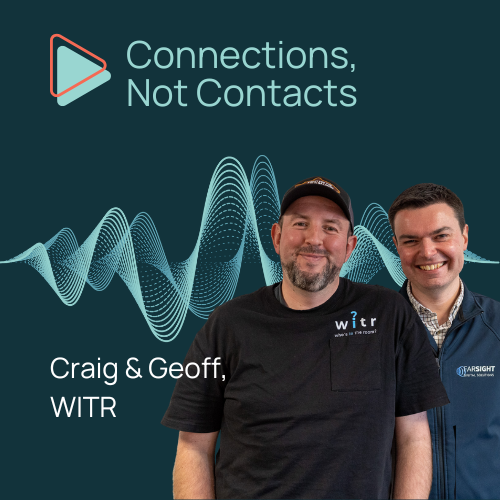
[00:00:31] Speaker C: Welcome to Ideas to Impact. My name is Charlotte, I'm a program manager here at Codebase and I am delighted to be joined by Jeff and Craig from Witter. So Jeff, Craig, thank you for joining us. Should we start off with a bit of an introduction? Who are you and what is Witter?
[00:00:46] Speaker A: Witter is an acronym for who's in the room.
[00:00:51] Speaker A: And yeah, it pretty much, it says what it is on the tin. We're enabling people at networking events to be able to find out who else is in the room and what their intent is.
But before I bleat on about Witter, because I'm quite good at that, Jeff, do you want to introduce yourself?
[00:01:06] Speaker B: Yeah, I'm Jeff and Craig had the idea for Witter and I came along and told him that's the best idea you've had so far and wanted to help build it. So I've been involved since then.
That's a co founder helping to make it a reality.
[00:01:21] Speaker C: Brilliant. Has Craig come to you with lots of different ideas and this is the one you decided to jump in on?
[00:01:26] Speaker B: Ideas, people. We've both had a lot of, a lot of things. We have a lot of things going on currently and Witcher is one of them. But Witcher's been the sort of only, I guess, app startup idea which has been clearly, ah, that ticks all the boxes. That works.
[00:01:40] Speaker C: So tell me more about Witta. What is it and how did it start?
[00:01:42] Speaker A: Yeah, just on that note on that last one. So yeah, answers both the question and something I want to elaborate on is when I introduced this to you, Jeff, you said this is your best idea yet and you emphasized yet I quite like that. But it was just, it was simple, it made sense, it solved problems that we both faced and having been to quite a few networking events, that sort of thing, I discovered that I was proper introverted and I didn't realize it until that point. I didn't want to go and navigate nine other people in a room Find out who they are, small talk, how craps the coffee, that sort of thing. You actually just want the meat on the bone and get it answered. And the story is quite simple.
Went to a showcase for first steps for Titskiller, the first steps program that you guys ran.
And it was in March 24th. And that was the point where I realized when I walked out the door at the end of that night, I just thought there's 200 people in there, from ministers through to fellow founders, that there's probably a lot of missed opportunities.
But there's one guy I sat next to and there's a chap called Dale Hornage who was.
I think this company is called Build with Zero. And hopefully it's still going. He's moved out to Ontario and Toronto, I think, because he's doing between both.
And we just got chatting and said, he know it's really difficult to navigate this room. Do you know if there's anything out there? And he says, no. I said, what do you do? And he said such and such. And I said, well, do you want to build it? We'll just talk about this together.
And within three, four weeks, he had a bill for us, didn't he? It was really quick timeline. And that was on Flutter Flow, which was fun at the time, but yeah, it's an absolute shambles now, I think. Flutter Flow.
So that's the story. It was just a case of not knowing who's in the room, hating small talk, and being in a community where you're actually supposed to talk to each other, which I find more and more. This community, especially in the tech startup and founder world, we don't talk to each other. We're all siloed in our little rooms with the door shut.
[00:03:51] Speaker C: Yeah. So give me a kind of idiot's guide to what Witta does and how you use it.
[00:03:57] Speaker B: Could do that.
[00:03:58] Speaker A: Yeah, you do that.
[00:03:58] Speaker B: So I do a lot of these demos, so I get a. Well, rare script.
So, so essentially the idea is to know who's in the room. So it starts with the event organizer. They set it up and they decide that they want to have Witter element. It's like a networking layer, their event.
So they very easily set up this event by just putting some basic details into the web app and then it generates a QR code and it's based around the simplicity of a QR code, which is one of the few good things that came out of COVID is now that everyone understands what a QR code is and how to use it. Whereas before it was quite niche.
So as participants in the event come in quite separate to registration, which is key because lots of people register for something and don't turn up. But the useful thing is to know who's actually in the room. Who can I talk to? There was always a passion about facilitating real life in person stuff, not helping people to do more and more online, but actually how do we help people to do more and more in person and get the most out of that, like Craig was saying. So the event organizer has got the QR code. We have various screens that they can then use. If they've got a big display screen, they can have it up there. If they've got a little iPad, they can have it there or they can print it out. And one way or another people scan the QR code and then they are asked for a few simple bits of information.
We've Synced up with LinkedIn so they can populate it that way as well if they want a little bit. And then the key bit is where they put their conversation starter. We used to call it Headlink, but I think Conversation Starter is better.
[00:05:16] Speaker A: It's been called so many things like ask go for a headline. Yeah, yeah, conversation starter.
[00:05:20] Speaker B: It's just a few words and this is the area that.
[00:05:24] Speaker B: Maybe by the time this goes out we'll have a new, there's a new version coming which has got a whole lot more kind of clever AI stuff around us. But right now it's just quite basic. You type in who you are and what you do and people, people go in different routes with that. It's quite an open ended thing. And then you join the room and you press that button to join the room and that's you. Then the next thing you see is a list of everybody who's in the room right now. If you're the first, you'll just be you. And then other people join the room. That list populates and it's just in the browser on your phone. And as that builds up, you can start to look at people and think who might I want to talk to here? Rather than having to look around the room and go, I don't know who any of these people are. I don't know if any of them are relevant to me, you know, if they're the same as me.
But the layer that's coming is the part where AI will help you decide who to talk to. But we can talk a bit more about that later if you want.
And then you can mark people as favorites, you can organize it by recently joined alphabetical order. If you're looking for a particular person, you can search it. And essentially that was the basic version. We started with just that.
And that helps people see the value in that straight away. But then what's really nice about it is you can then take that list home. You can tap on people's info button and then connect with them on LinkedIn from there, find them on LinkedIn to connect with them. And so it allows you to go home and go, right, who did I not talk to? Oh wow, I wish I talked to them.
I'll go connect with them now. If people shared their contact details, then you could get drop an email or something like that. So it facilitates the ongoing stuff afterwards. But then the last part is that from the start we decided for this to be useful, it needs to be AG DBR compliant. So it's all consent based. You're choosing to join the room, you're not forced into the room because you signed up for the event. This is an extra bit that you choose.
But also we delete the data after 48 hours.
People have pushed us on that and said, okay, can we not have hours for 10 days or something? And the idea is that it creates emergency with follow up, which is the best time to follow up anyway. No one wants to hear from me 10 days later. But also it means that when I put my information into door in a room, it's not hanging around anywhere unless people have made their own copy, which is fine, they're entitled to do that. They could have done that by meeting me in person. It's the same thing.
But it's not sitting on the Witter servers, it's not sitting anywhere. So I could be confident that it's cleaned up afterwards. And that's not hanging around because those links are available to anyone who has the link. So it's gone once it's past the 24 hour window.
[00:07:36] Speaker C: That's great. So it must kind of create that kind of scarcity mindset of like, right, we must act on this.
[00:07:40] Speaker B: Which actually helps make the networking event more valuable.
[00:07:42] Speaker C: Yeah, very much, yeah.
[00:07:43] Speaker A: It's like a countdown, a deadline. You know, your event finishes at say 10 o' clock at night on a, let's say, give it more realistic time, let's say 8 o' clock on a Thursday night.
[00:07:56] Speaker A: And you've had a couple hours and there's 200 people in the room. There's no way you would have worked the entire room. So there's that. But if you're given 48 hours, we actually skip weekends, don't we? So that's a really bad analogy or example, but let's say 48 hours later, you've got that. Got to that point where if you haven't followed up and you haven't actually continued networking, it's your own fault. I get that. But you didn't have that opportunity before Witter came along. You only had up until 8 o' clock that Thursday night to do your networking. And generally, most networking for me in these sort of environments was a case of go up to the nearest person, you know, learn a little bit more about them, and then you might meet their pal, whoever's standing next to them. That's it. That's all you get. Whereas with this, it makes it a lot more efficient. You've got a warm introduction and you can walk away knowing you unturned every stone, so to speak.
The thing about Witter was that's all really helpful if you're an attendee, but our customers are actually event organizers.
So, yeah, all of a sudden we're like, oh, we've got this awesome thing and attendees really love it.
But it wasn't accidental. But we had to turn this into some sort of business. It had to become a model that people appreciated. And it was off the back of that first showcase, I spoke to Natalie Hotchkiss and said, are you interested in this idea? And she said, absolutely. Brilliant. That's great. Let's speak to Kelly. Let's speak to such and such. And the team got right behind the idea because all of a sudden they saw that their event scores could go up because there was more attendees that were more engaged.
We're getting more out of the events. So it actually helped the event organizer. So we started focusing on that and then realized there's a GDPR compliant attendee list, which is live being generated, which removes the time taken to build that list, which is static by the event organizer. So you get the attendees to build it for you as opposed to you building it for them. And that's been secret sauce since.
[00:10:02] Speaker C: Yeah, brilliant. So I suppose it must be quite challenging working in that space between kind of events logistics and those people who are going to be your customers and also building kind of that SaaS product almost.
Where have the challenges been in building Witta so far?
[00:10:19] Speaker A: Yeah, where do you want to start?
[00:10:20] Speaker B: Well, we have too many ideas is maybe a good place to start, because I think.
[00:10:24] Speaker C: Is there such a thing?
[00:10:25] Speaker B: Yeah, well, I think that's the.
[00:10:27] Speaker A: Everybody else has too many ideas as well. Like, every call we've been on is, oh, could it do this?
[00:10:31] Speaker B: Could it do this?
[00:10:32] Speaker A: Yeah, yeah, yeah, it could, but we're not going to do that.
[00:10:34] Speaker B: I think that's the strength of the concept. It's so simple. People go, oh, that's brilliant. In fact, a lot of people said to us, why doesn't that exist already? And I think because it's too simple. But we've also been given lots of ideas by other people who've said this has been one of the challenges, who've said, that's great. So here's how you're going to turn that into something that serves these big conferences.
And we're like, yes, but what you're describing is a different product.
And I see how that could make millions. Great. But that's a different product. We haven't built that. We've got this and we're at this sort of small events. And I think that's been an interesting challenge, sort of realizing that we need to kind of fight for our market because the market is the small events, which is maybe why no one's focused on it because people tend to look for the where's the big win? That we could do. But there are. We did a conservative estimate and something like 20,000 small events a day that could be using this.
So.
[00:11:21] Speaker B: It'S not a small market actually, but it's those sorts of.
[00:11:25] Speaker A: In theory, that's a bigger market than the bigger conferences, if you think about it. So you've got all these small commodities. Yeah. And what we have done and a bit of feedback. I don't know if I've ever spoken to you about this, Jeff, but quite a bit of feedback that I get, and maybe you get as well is we've come in at the right end. So our price point is low. We're not the 10,000, if not more dollar or pound mark supporter and whatever umbrella type platform. We're actually, we just come in where you could be a dozen people in a room as a committee through to 200 people currently. And then once this AI integration comes in, you know, actually AI for good and for people, you know, we can, we can roll out to several hundred, if not thousands for that matchmaking purpose.
So, yeah, we, we've just, we come in from the lower end and supported people that ne. Well, don't know what it is. It's a low price point. It's a low barrier to just get started.
So.
[00:12:21] Speaker B: Yeah.
[00:12:22] Speaker C: So how tempting is it? And obviously, as you're starting out as a business, how difficult is it to balance that customer wants this and it sounds really exciting to. No, let's stick with this. Even if they're offering you.
[00:12:34] Speaker A: Depends who they are in your contact. And we're really delighted to be partnered with a chap called Andrew Charlton of Events. And he is, as far as I'm aware, and you can maybe verify this, Jeff. He is the organizer, well, the biggest networking event organizer in the uk.
[00:12:55] Speaker B: One of, definitely.
[00:12:56] Speaker A: Yeah, one of, anyway. And he is at any one point, any one week, three events, as far as I can see.
So we partnered with him, but the reason we partnered with him was because he saw us early.
I don't know how that introduction started, but he saw us early and said, oh, could you build this feature? And that was the one time we both went, yeah, we should do that. Yeah, instead of, no, we're not.
[00:13:19] Speaker B: So that. So that was the thing. The difference was that he's in the space. We're exactly trying to help. And he had an idea.
[00:13:25] Speaker A: And his idea was he owns that domain as well. So that. Or nearly.
[00:13:28] Speaker B: Yeah, yeah. So. So he had an idea for how could this actually help him? And, you know, so one of his ideas was a sponsor logo, which is a great idea, you know, so, you know, so we said, great, we'll look into building that and we've enhanced it from there. So the idea that if you're the event organizer and you have a paying sponsor who sponsors your event, why not get their logo in Witter? And it's not just up on a screen somewhere, it's actually in people's hands, which is a huge difference. Then we put UTM tracking parameters on the link so that someone can click the logo and then they can see in their analytics that it came from Witter specifically. So if there's a big enough event or that's a regular thing, then they're starting to see, oh, all these visits are coming through to my sales page because I'm on the sponsor for that thing. So that's something we can monetize a bit more by charging for that feature, but then the event organiser can monetize it. The sponsor could get more coverage and more data. So everybody wins. And if they're a relevant sponsor for the event, then the attendees get something useful out of it as well by experiencing what the sponsor has to offer. So I like, those are the things that we guess we're using as a filter, if we'll build it, if it's a win, win, win, win all round. But if it's an idea that turns it into something in a different market. Well, that's quite risky because we don't know if that we'll work or not because we're building something entirely different and new.
So we've had a long list in Asana of all of the things that we could do, and a lot of them get discussed.
[00:14:46] Speaker A: They're still in Asana.
It's sitting at the bottom.
[00:14:50] Speaker C: I suppose the more you do kind of testing with different audiences, if it comes up over and over again, then it's be something you can think about.
[00:14:56] Speaker B: Exactly. If lots of people ask for it, then that's a mandate to build it.
[00:15:00] Speaker C: So let's talk a little bit about Founder Journey and what it's like being a founder of a new business. What's it? How do you handle the highs and lows? It's obviously a very tumultuous thing to do, and there's a lot of personal energy and emotion that goes into it. How do you handle that as founders?
[00:15:18] Speaker A: You're just going to laugh with hysterics.
Yeah, keep smiling, keep smiling.
[00:15:25] Speaker A: I think from my perspective, being a founder is a type of person.
[00:15:32] Speaker A: It's an itch you want to scratch. It's just this thing that you know you have to do and you just want to get out of your system. And if it doesn't work the first time, you'll keep doing it and you'll end up with several ideas. And then one of them, apparently is the best idea. You come up with inverted corners and you stick with it. And that, for me, is the Founder Journey.
[00:15:54] Speaker A: Is having or trying to scratch that edge and just keep going and being resilient and going through hell, bank balances, family strife, traveling around the world, all sorts of wonderful campaigns and programs and things supporting you, but also trying to make ends meet and not knowing where it's going to go.
And just you've made something out of nothing. So, you know, there's no path, there's no trajectory, there's no monthly pay.
You just have to keep going.
Whereas there's some people, and I'm not one of them, quite happily sit behind the desk nine to five, five days a week or whatever, or they're four days condensed hours or whatever it is.
[00:16:35] Speaker A: But that's. That's not for me. I can't do one thing. And we've had that conversation many times where just, you can't do one job. Got to have seven or eight jobs in a day and then hit it.
[00:16:46] Speaker B: It's the definition of an entrepreneur's nexus. From the French to start, you know, you can't help starting things.
Um, yeah, but. But also I think the journey is not the same for everybody. That's the, that's. And so we know both Frigate and I have other businesses. So it's not. This isn't our first time starting a company, but this is the first time doing a tech startup of building a piece of software that people will pay for. So there's lots of lessons to learn along the way and I mean there's so many books and podcasts and videos and you know, courses all about that exact same thing. But. And we've done obviously a lot of them and the TEC program and that kind of thing.
But I think there's. That's what sometimes part of the problem because it's overwhelming and you could spend, you could spend a full time job learning about how to do something instead of doing it. So there's also that challenge of picking and choosing the quality stuff that will really help that's laser targeted on the right stage rather than trying to absorb information that's really. For someone who's a very different stage or.
[00:17:49] Speaker A: Yeah, it's funny though, we're answering that like we've already. We've made it.
[00:17:53] Speaker B: No, we haven't. But it's all there. You know, it's still early.
[00:17:57] Speaker A: Just to make that very clear to the. We haven't made it. Yeah. So.
But yeah, the journey itself is well supported by.
Yeah, going to do the whole sponsorship thing later.
[00:18:11] Speaker A: I can't praise Tekscaler enough and that's me just blowing it sounds like I'm blowing smoke Pie cat. But the reason I can't is not necessarily all the programs and support. It's actually the community it builds and you get to meet people that have got some weird and wacky ideas. You see them fail as well and you just go, actually that's cool. Glad you failed because you're learning from your mistakes and we have this culture in the UK where you're not allowed to fail and if you fail it's a bad thing and don't pick yourself up then it doesn't even exist here. It's just cover up.
So yeah, it's an interesting journey. It's a good community.
It's not as siloed as working at home on your own trying to build something.
And also it's got these sort of satellite code bases around the country as well, which you can migrate to and meet new people as well. If you get bored of the community that you're part of Regionally.
[00:19:09] Speaker C: So, yeah, I met everybody in that one. I'm going to go to another place.
[00:19:11] Speaker A: Yeah. Done the Witter there. Done the Witter somewhere else.
[00:19:14] Speaker C: Going to go to Witter somewhere else.
[00:19:17] Speaker A: I went off.
[00:19:18] Speaker B: I don't know that one yet.
[00:19:20] Speaker C: So, I mean, that's a really nice thing. And I think from a lot of the entrepreneurs that we chat to kind of that sense of community and feeling like you're not on your own does make a big difference. That mindset of like, okay, other people have been through this.
[00:19:32] Speaker B: Yeah. And encouragement is so undervalued, I think. So.
Name drop. Mark Sutherland and Nurette Ferns. Is it Inverness Unfiltered. So, Mark and the encouragement with us, my local unfiltered. And we've been using Witter there for early days. I try out some new beta features there sometimes and let them know if we just try this thing, it might not work.
I know pretty much everybody there who's regular. It's a really lovely community. Really look forward to seeing everybody there. But to be honest, just the sheer encouragement from Mark and the rest has been one of the things that's kept it going. Because I know that whatever we. We bring, even if I bring them something that is a bit of a flop on a small scale.
[00:20:16] Speaker B: There'S no negativity that could be very different, but it's actually just sheer encouragement and not in a knowledgeable kind of like, this is a great idea for the X, Y and Z reasons from a technical perspective or anything like that. It's just.
[00:20:32] Speaker B: Keep going. Your passion's great and we love seeing you make a go of it. And that is so life giving. And if you're in an environment that doesn't have that, then this is a hard journey that may not have any reward at the end of it. So you would just give up.
[00:20:50] Speaker C: Yeah. So much of it is about kind of that human aspect of it as well. And what might be a failure in a tech product or a feature or an addition may not be on the human aspect.
And you can't forget that humans are kind of the end users of ways to fix it.
[00:21:03] Speaker B: Exactly. Yes.
[00:21:04] Speaker A: The thing about Witcher is we built it for that community.
[00:21:08] Speaker C: Yes.
[00:21:08] Speaker A: So we weren't green to textscaler and Codebase. We started. What was it called at the time? Work Photos. No, Fix Live. Yeah. What did we originally call it?
[00:21:20] Speaker B: Fixer. Was it. There was lots of names.
[00:21:23] Speaker A: It was when Chatbots came out. That was our first tenancy in Sterling Code Base and then that got changed several times into all Sorts of different things. And now it's called work photos and Craig Parker and Alan Blake are involved in that.
Then we got.
No, you had something else. You had another business.
[00:21:43] Speaker B: Yeah, digital marketing company. That's why I was in starting code base with that.
[00:21:47] Speaker A: So we were like the early tenants, I suppose, of the Starling code base. And I believe the Starling code base was the first one as well.
[00:21:54] Speaker B: Outside of here. Yeah, yeah, yeah.
[00:21:55] Speaker A: Well, there's a reason I went back in time. There is because we were.
We understood the community that was being built around Techscaler and Codebase.
[00:22:07] Speaker A: To the point where then I saw a problem within that community that we tried to fix. So it's about building something that you understand.
And if anybody asks me, do you have an events background? No, of course I don't. But I do have a networking community.
[00:22:22] Speaker B: And that's the thing is it's not an events app because that's the other thing that one of the things people push us to is, oh, could you build all these things for organizing an event? So well, there's other tools that do that. There's plenty of them. You don't. Nobody needs another one.
[00:22:32] Speaker A: My experience is that I'm a complete introvert and I don't want to do anything.
[00:22:36] Speaker B: So that's it. Just solve the one problem. And I think it's also interesting that people look at which are. And don't get it, who aren't running a business or part of a community of some kind. They don't go to meetups or networking events, that kind of thing. They don't understand why anyone would need this, which is a great example of product market fit, that once someone's in that market at all, where they gather in a group, they immediately see the attendee list and go, oh, that's brilliant. I'd love to have that.
[00:22:59] Speaker B: But it doesn't matter that people who aren't in that space look at it and go, ah, that looks like a weird idea. I don't understand that at all. But that's fine. They're not the customers.
[00:23:05] Speaker C: Yeah. He'd be kind of unconsciously doing market research for years.
[00:23:08] Speaker B: Exactly. Yeah. It was all just in the air. Yeah, yeah, yeah.
[00:23:12] Speaker C: So, I mean, Craig, we met when we first went to Silicon Valley. Was it. Was it this candy?
[00:23:18] Speaker A: It was in May.
[00:23:19] Speaker C: It was in May because it feels a long time ago now.
[00:23:21] Speaker A: It does, yeah.
[00:23:21] Speaker C: So what, do you want to go again? Yeah, can we. Should we just sack this off and just jump on a flight?
[00:23:27] Speaker A: Stop the recording?
[00:23:29] Speaker C: Yeah.
What was Silicon Valley, like. And what impact did that have on you as a founder and on Witter.
[00:23:36] Speaker A: As a company, it's eye opening. So prior to going out, I got some advice from someone who lives out there, phoned him up, said, what do I need to know before I come out to San Francisco?
And he says, play on your Scottish accent.
That was the best and first bit of advice I got. And I was like, are you kidding? Come on, is that it to end?
Yeah, it's outlet. It's like, take the diplomatic passports across. I really love you. Well, what about on merit? Can we talk about something that's actually going to work?
And yeah, he basically said, whatever your number is, add a couple more zeros, if not three of them. I said, nah, come on, go away.
If you're looking for investment, which we weren't at the time, and I don't even know if we still are. Probably are, who knows? We need to have that conversation again.
But at the time it was just like, well, okay, we'll ask for 5 million, see what happens.
[00:24:28] Speaker A: It's just like some weird number, just pull out the air. That's the expectation I was given prior to going out.
And then as soon as I arrived, I said, I'm not looking for investment, I'm looking for customers here. We've got to hustle because San Francisco is the one and only nucleus on the planet, I believe, of startups and founders meeting investment and those who have taken risks and really grown. All you need to do is walk along the central streets and whatnot and look up. These skyscrapers are built on risk.
And you realize that this is where you take a pun.
So out there, to answer your question, the attitude to everything was a lot more positive. It was a yes before it was a no. It was a hell, yeah, or it was a no chance. But at the end of the conversation, every conversation, it was a case of, but you know what, you should speak to that guy or that woman and just say.
[00:25:26] Speaker A: I've recommended you. And that's how it worked out there. Whereas here it's not so much the case. You have to ask, you have to sort of navigate and tweak and conversations.
So, yeah, there was a positive mindset. Everything's a lot quicker.
You go and meet as many prospects as you possibly can, you get pretty much all yeses.
And I suppose that's our next step is to roll out over there again because, yeah, it's just a lot quicker.
[00:25:54] Speaker C: Yeah, it was used for talking about risk as well. And it's like you're a failure if you haven't failed over there.
[00:25:58] Speaker A: Whereas exactly that was one of the first questions I got asked by. I can't remember the name of the lady but she was an investor and she said what have you failed at? I said that was the first question. I said oh, I've never been asked that before. I was like can I give you a list?
And that was quite refreshing actually. Yeah, no, bang on.
[00:26:16] Speaker C: Yeah, yeah. And Jeff, how was it for you not being out in Silicon Valley? Did Craig feedback nuggets of wisdom?
[00:26:22] Speaker B: There was lots of great, great feedback coming back. Yeah, lots of. You could tell. I mean I could tell the energy was infectious because you were. Yeah.
Coming up with ideas and sort of. Yeah. Thinking bigger I guess because yeah.
[00:26:35] Speaker A: Rewriting the pitch deck at 3:00am Yeah, 3:00am should I say. And yeah, sending across for you to proofread and you're like what? Wait, what?
Why are you asking for that?
[00:26:45] Speaker B: Yeah, well because the thing is I don't, you know, you read the stories of startups like the similar things, little products that someone built where there's nothing particularly clever about it from a technology point of view but they've just taken off and though but often it's because of a conversation or a first big in to a part of the market or that kind of thing. And so I think we're. One thing Silicon Valley led to thinking even more of is that we just want to be open minded about what might happen next rather than having a plan. In traditional business which I run, one of you have a business plan and that's a very sensible thing to do and you have a plan and you have projections and you work the plan and you make decisions based on that. But the startup world's a bit bonkers and I don't think you should make too much of a plan because things come up out of nowhere, technology landscape shifting all the time and you might not be then agile enough to grab an opportunity when it comes but if you are agile enough the opportunity can come and you can say ah, well we can do that and we can have that with you. We can build that new thing and have it live next week, that sort of option. Whereas if it's not on your plan then you might not be able to respond.
[00:27:50] Speaker C: It's about having a plan and being able to like screw up right behind you.
[00:27:54] Speaker B: We're going somewhere else now which is a different type of business actually. So it's been fascinating running two different kinds at the same time and just seeing how they could feel into Each other.
[00:28:05] Speaker C: Yeah, brilliant. So what changes do you think you have made since you've come back then from Silicon Valley? Obviously you said there was an energy that kind of changed.
[00:28:14] Speaker B: I think scale. We've started thinking a different scale.
[00:28:19] Speaker B: But just in terms of.
[00:28:23] Speaker B: I think we were maybe a little bit. Maybe this is a British versus Silicon Valley mindset. I don't know. But there's a sort of. Maybe there's an element of thinking quite defensively and small and hoping it might work, but also maybe looking for someone to help out, like we need to meet so and so who's going to give us a big break or an investment or a contact or something. But we need to be quite passive and wait for someone else to sort of take the reins. There's maybe a little bit of that thinking and I think Silicon Valley probably helped us shake that up a bit and so we could let the dos settle and realize, look, there's no actual practical reason why this couldn't be used by 20,000 events a month or whatever.
And so what would it look like to do that? Could we do that?
And also hustling a bit more in terms of everything doesn't have to have all of our docs in a row. We can release stuff, we can get out there, we can, stuff can break, it's okay, fix it, move on.
And that be better than having too much of a safety minded, kind of go cautiously mindset, which is more suited to normal traditional business and less to a startup. I think we probably caught the bug a bit.
[00:29:27] Speaker A: Yeah.
Because of the mindset out there, the appreciation for what Witter did. So we ran two Witter events out there. So our first ever US Twitter event was in the co working space that we were using and it was fantastic to see.
[00:29:45] Speaker A: Everybody use it because they could actually get to the point quicker. And that is the attitude out there. Just get to the point, tell me the answer to the question. I need to know. Whereas here, like you said, it's a lot more reserved. It takes a long time to acquire a new customer for Witter. It takes several emails, a demo call and.
[00:30:10] Speaker A: Maybe there has to be a referral or something, which is all very good because that's what you expect in the uk. Whereas out there it just seems like, yeah, we'll use that.
Oh, okay, cool. What did I do next? I've forgotten sort of thing. It was too quick almost that response. So yeah, to see people using that and getting a response from.
[00:30:29] Speaker A: Was good.
[00:30:29] Speaker B: Market research on the point of attendees as well, because the Silicon Valley thing of. It's like, get to the point that you say, I'm like, we don't need much small talk here. We can just snap straight to what's important to talk about. And we had some follow up video calls afterwards where I was like, oh, this is great. People are just straight into action. Whereas there's a lot. We have a strong tradition of small talk. We must talk about the weather before we talk about anything else and that kind of thing. So that in a networking event is friction. It slows everything down. But it's also. But it would be rude to just barge around saying, are you interested in talking about, no, okay, I'm going to move on. So it would be very uncomfortable and that would be a bad thing. But so that's. You may just realize that you could sort of. The Witcher layer sort of allows that same thing to happen In a culture where it's not normal to talk. Be a lot more blunt with people because you can just sit there quietly in the corner looking at your phone and go, I'm going to talk to those three people. And then you go find them in the room. Have a good conversation, including the weather. But you don't mind because you've already pinpointed your valuable sort of people to talk to rather than thinking, I need to get away from this conversation. But it's too. I can't be rude.
[00:31:29] Speaker C: Yeah, yeah. It definitely was a thing being out there and like, if people weren't interested, like, great, nice to meet you.
[00:31:34] Speaker B: Yeah. And off they go.
Good.
[00:31:36] Speaker C: I kind of like that because again, it's that introvert thing of like, oh, I don't have to try and make conversation.
[00:31:41] Speaker B: You've got a minimum social battery and it's draining and you're thinking, I haven't had much value from this yet and I'm running out of energy to talk to more people.
[00:31:49] Speaker A: I think one of the, one of the sort of things I've taken away from Silicon Valley as well and come back with is you go out with a cohort and that's all very well and good because you're a team, you're not necessarily competitors. Everybody knows what each other's doing. What was there a dozen or something?
[00:32:05] Speaker C: Yeah, I think there was 13 of you in total.
[00:32:07] Speaker A: Oh, that's lucky. Cool. So you know what the other 12 founders are doing.
So if you bump into someone or someone bumps into someone that's doing events or has a co working space or whatever they say you need something great. So you've all of a Sudden got a team of 13 people working with you and that was really cool. So bringing that back here, I'm still in touch with half of that cohort, I would say, and we still support each other and got this idea. What do you think? Not it's terrible carry on sort of thing.
So, yeah, if anything, a trip is a way of bonding with a group of people to then use them and reciprocate as well.
[00:32:46] Speaker C: Yeah. And the nicest possible way. Use them.
[00:32:48] Speaker A: Yeah, yeah.
You've got to use people in business, don't you? That's the whole point.
[00:32:53] Speaker C: Yeah.
[00:32:53] Speaker A: As long as they feel like they're getting something back for it. That's pretty much why we do it, isn't it?
[00:32:58] Speaker C: Yeah, absolutely. So have you made any kind of business leads out in the States? Obviously you said you were thinking about bringing on American clients. Yeah.
[00:33:04] Speaker A: So we've been in this development phase for a wee while now and yes, we have. We've gone through this development phase and we're feeling now we're really comfortable and with this next release I think we're really ready. But the attitude in the States is that if it's kind of okay, it'll never be used again.
Whereas here, if it's kind of okay, you probably will use it again because you can see through all the kind of the rubbish.
So you only get one chance out there. And I feel like we've held back, which you're not supposed to do as a founder is, you know, polishing the proverbit.
But I think we needed to for the American market.
So when I went out, we've got prospect list, we've got affiliates that are really keen to help us and sell for us as well.
So I think we're very close to using the American market very soon.
[00:33:50] Speaker B: That's brilliant. It's also just bigger out there as well. So there's an element of. We had to stress test this a bit more. So if it gets used in an event with hundreds of people, while there's another event with hundreds of people next door and another one over there, will it be okay? And there's some sort of technical infrastructure stuff that we hadn't prepared yet.
[00:34:06] Speaker C: Yeah. Have you tested it till breaking? How many people can you have on Witter at once?
[00:34:10] Speaker A: Yeah. And there's a state out there is like a country to us and there's plenty of them on that flag. So you just keep pulling the lever with the right formula and just eventually you'll hopefully nail it.
[00:34:24] Speaker C: Absolutely. Jeff, a while ago you touched on Kind of trends and obviously tech changing so quickly. What changes have you had in Witter so far? And what do you think's happening next?
[00:34:35] Speaker B: Well, the prototype that Dale built was on Flutter Flow, but probably because we thought originally it would be a mobile app, because there's the. But actually, that's an interesting trend. Everything was a mobile app and now hardly anything is a mobile app. There's an app for that. I was telling my son that just yesterday. I said, that used to be a thing. There's an app for that.
But now the idea of going through the gatekeepers of the Play Store and the App Store just seems like an awful lot of hassle when a web app could do virtually everything. And there's expensive. Yeah. And it's extra cost and. Yeah. So that's one thing. So it was an early decision to go, we're not doing a mobile app. There's really no need to. This works perfectly well just in the browser.
[00:35:14] Speaker B: And then we moved away from flutterflow for that reason, because it's really geared towards. It can be a web app, but it's geared towards mobile.
I think that obviously AI is the huge trend, but we are conscious about that because a lot of people, I think, are bolting AI on because they don't want to feel like there's no AI in this app. I'm actually more inclined to use something if there is no AI, because you've clearly decided to stick to your cons and build a good product rather than jump on a bandwagon.
So we've been deliberately keeping those cards close to our chest, building some clever stuff in the background, which you'll be releasing soon, because we wanted to do it right, rather than just go, oh, quickly throw some AI at this so that it doesn't look like it's behind the curve.
[00:35:51] Speaker A: Get the domain AI.
[00:35:52] Speaker B: Yeah.
[00:35:55] Speaker C: So do we get a sneak preview of what the kind of things you've got in store for Witter next?
[00:35:59] Speaker B: Yeah.
[00:36:02] Speaker C: Do.
[00:36:02] Speaker B: We could tell you the stuff that we know will be coming and maybe be a bit.
[00:36:07] Speaker C: I'm not asking you to give up trade.
[00:36:08] Speaker B: No, that's fine. I'll just be a bit cagey about the things that are not 100% working the way we want them to, just in case. But essentially it's matchmaking, like Craig alluded to earlier, and there are other tools that do this. There's actually quite a lot of people trying to sort of work in this space. So we've taken a slightly different approach, which is probably. Is the trade secret bit but the idea of what helps even more if you're in a room with 200 people is can the app to suggest people for me to talk to. Even better, can it suggest someone for me to talk to and give me my opening line?
Because as an introvert, you're like, oh, this is great. And this is like, basically it's very close to aligned to dating. This is the reality.
[00:36:44] Speaker C: It's professional dating. Yeah, speed dating was a thing and then he turned into speed networking.
[00:36:49] Speaker B: They're close to all. It's people meeting people for, you know, for mutual benefit. So the idea with AI is to make it more human, not less human. That's the thing I would be sort of passionate about in this. And that ultimately is what big switch are successful because it's people first.
So the.
[00:37:07] Speaker B: What it will look like is.
[00:37:11] Speaker B: Kind of loose on the details. But basically you will. You just told me this super easy workflow. That's the. It's got to be smooth. We don't want people sitting on their phones for, you know, five whole minutes when they've just arrived at an event, clustered around the coffee table, tapping away because it looks like they're just on, you know, on Instagram or something. So it's got to be quick and smooth. So we've got various little hacks that make that better.
And then the app then has the ability to go populate information about you. So more to come on that. But then there's an engine in the background that's doing some clever matching more than like, answer these three questions, then we'll match up people who should talk based on those three questions. But there's a whole other layer of useful data being used to match people up. And in our early tests, well, not so early now, it's doing really smart matching where we can get it to make connections that just are that the kind of connections you'd make if you went off and researched someone and looked for something that your brain would go, oh, that's interesting because it knows the more that the AI knows about you, the more it knows about them, the more it can join together. It's bringing us into an interesting space where we have to be careful. It's not exposing stuff about people that's actually publicly available out there, but they didn't know it was. So there's lots of interesting hurdles to come across which we are figuring out.
But then one of the ideas around the Give me the first question to ask is that it breaks the ice because Witter becomes this sort of third energy in the conversation where if I go up to you and I say, guess what Witter said we should talk and it said I should ask you about when you went to Silicon Valley, then you go, oh, that's funny. But Witter takes the energy and introduces something into the conversation where I'm not going up and might make me feel really uncomfortable to go, hi, I'm Geoff. You know, am I right in thinking you went to Silicon Valley? It's all on me then.
[00:38:55] Speaker C: Yeah.
[00:38:56] Speaker B: But if the.
[00:38:56] Speaker C: It takes that embarrassment out of it.
[00:38:58] Speaker B: It does, yeah. And it could even be, you know, we could, we're thinking of trying things like.
I don't think I told you this, but I was trying things like, you know, give me a comedy line and give me a serious line of what suits my personality around how I would introduce myself.
[00:39:10] Speaker A: That's right.
[00:39:10] Speaker B: And then people could ignore it and do the wish come out of a.
[00:39:13] Speaker A: Slider on how funny it could be?
[00:39:14] Speaker B: Yeah, yeah. Like increase the funniness, please.
[00:39:17] Speaker A: Yeah. Just on that though, the matchmaking thing, before matchmaking comes along, it's good to know who you are online as well.
So this is going to tell you about what's out there and then of course you can edit that. So if there's something in the newspaper that you didn't want anybody to see, then fair enough, you can delete that out and then you broadcast to the room essentially who you are, what your profile is. And that conversation starter as well is really important.
[00:39:45] Speaker A: But I think from my perspective, what we're doing is we're opening this up to larger events by using the AI integration or whatever you want to call this, because nobody's getting it right. In the small, in the medium size events on how to deliberately connect people with intent.
[00:40:08] Speaker A: I don't see. I think Luma is close in a way that it just gives you a list of attendees, but not everybody fills out their profile and then you get there and everybody's got a blank profile image and you don't even know who's who, that sort of thing. So we're filling a gap there. So you wouldn't use Luma or Eventbrite or whatever to use that in a smaller event. So we've covered that, we're happy with that and we could continue growing that way. But we don't want to go for the 20,000 three day sort of events either. I think we're up to that point.
[00:40:40] Speaker B: With AI and there's conference apps for.
[00:40:41] Speaker A: Those where you can totally, hugely funded.
[00:40:44] Speaker B: And you can arrange some of are terrible. Well, that's the thing.
[00:40:47] Speaker A: They all are.
[00:40:48] Speaker B: Had a lot of feedback about that.
It cost a fortune for the conference to use it. But then people just get fed up with it because it's such a, such a hassle. So. And then we've had that comparison with people have been on demos and said, I use those conference apps. And then by comparison, because Witter is so simple, it's like that's a breath of fresh air because I get it in half a second of looking at the interface rather than where on earth, how do I do this? You know, and then you're again, you're drawn into the tech instead of you're there to meet people, you know, and so how can we get people off the tech as quickly as possible? And that be the value.
[00:41:16] Speaker C: Yeah. Kind of ties it all back into it being a networking thing. It's not about being here, it's about being in the room.
[00:41:22] Speaker B: Yeah, exactly. Yeah.
[00:41:25] Speaker C: So magical genie turns up and grants Witter one magical wish for the next five years. What's it going to be?
[00:41:33] Speaker A: Five years?
[00:41:36] Speaker A: I think for me, I would love to prove the model of a user led growth.
I think it's such a thing in the moment.
[00:41:44] Speaker B: Yeah. Bootstrap all the way.
[00:41:46] Speaker A: Yeah. I mean, we're going through investment programs and stuff just now just purely for my awareness and trying to understand it all. And if we are going down that route, then great.
But we're at this sort of, we're coming to this junction where you go investment right or not left.
And we're just thinking, well, it's slower left, but it's a hell of a lot more exciting.
So, yeah, there's that. I just, yeah, I would love to see this user led growth idea coming because it is a networking tool.
It's got the old cliche network effect, let's call it, which we're not allowed to say anymore for some reason.
But if you think about what we've built, we've got 50 to 100 people in a room.
There might be one or two people in there that are prospective customers for Witter as well. And then the other 90 are potential affiliates of Witter. So they could go and sell to someone that they know that they love going to networking events or an event with a networking component.
[00:42:41] Speaker A: So that's what we want to do is try and grow on the community that we're building with intent, who we're helping connect with each other. And we're seeing founders meet co founders and we're seeing investors meet founders and Vice versa. We're seeing all these connections being made which we can't measure, but it's very close to be. It's closer to being measured than any other tool out there from an analytics standpoint. But yeah, this user led growth is something we need to focus on because it's something that is interest, I think.
[00:43:10] Speaker B: I think you could probably say, I guess the genie's wish would be, could I have a fully populated working affiliate network? Just if there's affiliates driving growth because they care about it and they're the right people, community doing it, then off it goes. And then when there's lots of users, there's money coming in that can justify building features faster and making it more robust and better for everyone and.
[00:43:34] Speaker B: Scale it up.
[00:43:35] Speaker C: Yeah. So have you got any kind of those you mentioned, kind of the connections that are hard to measure? Have you got any kind of nice case studies where people have gone to you and said, I met this person and I've done this because of your app?
[00:43:46] Speaker A: Yeah, there's plenty of circumstances where, I mean, we've even got in our testimonials video that we've got on our website. But the moment when you actually see somebody walk up to a screen at an event where Witter is at and scan the QR code and then walk off and start doing their own thing like, oh, they've seen that before, that's intuitive. They know the brand, they get what it is for and they're just going to use it the tool. That's the moment. As opposed to answering your question properly there.
[00:44:09] Speaker B: Although we can answer that as well because that's been lovely to see for Witter. But there's also, but I could say the exact same thing. Someone goes up and scans the thing, looks at the thing and goes. And you see, I don't know who it is that we're looking at, but on the list, you know, going, oh. And then they look around the room and go, ah, there they are. And off they go and talk to them. And Witter did that like that. I don't know what came of the conversation because we're not in the conversation that happens afterwards.
[00:44:29] Speaker A: And that's all part parcel of Lithro as well, is to not know what's going on. It's still private.
Your details are all deleted. As Jeff said earlier, after 40 hours, you're left to your own devices as if the doors have been closed. At the end of event, however, we've just digitized that or extended that period of time.
[00:44:48] Speaker B: There's been Opportunities to monetize in other ways. If we didn't do that, data itself could be valuable. And that's been deliberate decisions like, well, we wouldn't monetize in that direction because I think that's a thing, that it's a hill. We're happy to die on that. People want to be comfortable that their data is not being used. And I think that's an also. That's a trend as well, isn't it, that more and more people are using privacy browsers and things like that. They just don't want to be tracked. They don't want their data to sit around, chat.
[00:45:09] Speaker A: They built themselves out of it, didn't they? Yeah, it works.
[00:45:12] Speaker B: So I think that would be a good direction. And then I don't mind looking back. If it went really big and we look back and go, all the money we left on the table, as it were, and all the data that could have been useful. I'm actually really glad that it's not. It doesn't exist anymore because we protected people from that kind of harvest your data kind of monetization approach.
[00:45:28] Speaker C: I'm going to touch on the data thing as well and go back to kind of US Markets because obviously GDPR isn't a thing over there, so the deletion of data within 48 hours won't be a selling feature as much. So how do you adapt your.
[00:45:41] Speaker A: So GDPR is very much in the States now. It is, and it's growing strong and people are getting right behind it. It's a bit like that bandwagon that we jumped on, just all terrified of this. Fine, the ICO is ico. ICO would put on, you know, But I think more and more that privacy compliance is coming through, you know, in the States.
[00:46:05] Speaker A: As it is here. It's just we've been a little bit more.
[00:46:10] Speaker A: Advanced, I suppose, in picking out, whereas it's been quite reticent out there, because that's how people market there. That's how they make money and track your details and know what you're talking about. However, you know, we could talk about something stupid right now, like blue glasses of water, which we've got right in front of us. And in about a day's time, I'll get an advert for blue glasses, undoubtedly. But yeah, the GDPR is very much in San Francisco, but I don't know if it's spreading much from that.
[00:46:36] Speaker B: It is a trend, though. I think that's the worst idea. There's a whole market of apps and browsers and VPNs and whatever that people are using specifically because they don't want their data around. That isn't mainstream perhaps, but it's a.
[00:46:49] Speaker A: Bigger growing area and it's also an industry that makes a lot of money as well.
[00:46:53] Speaker B: Yeah. So I guess we can be more aligned with that while also.
Yeah. And at the end of the day we can produce a feature where people can optionally extend the time for the data lease. As long as it doesn't lever earn forever. There probably would be a hard limit on that.
It's already, as you said, we don't include weekends. That was because it tends to be more business sort of focused things that have flow on it. So it's 40 hours.
40 hours and within working days.
[00:47:19] Speaker A: That's very easy to explain.
[00:47:20] Speaker C: It's hard to do working days and hours. Yeah, yeah, it is.
[00:47:23] Speaker A: If you've got an event on a Friday night, it doesn't delete on Sunday night, it's Tuesday night.
[00:47:28] Speaker C: Yeah, makes sense. Makes sense. So I guess, kind of what kind of advice would you give to founders who are kind of considering entering this kind of world where users are unpredictable and you don't really know what's going to happen because obviously you're really concentrated on that kind of.
[00:47:44] Speaker C: Person led growth. What would you say to people who are considering doing something within that kind of maybe event space?
[00:47:50] Speaker A: I've got an answer for that. And know you're going to fail wherever your idea is.
Absolutely not. Because every idea you come up with, you think it's like this is the best idea ever. But I came up with a few. In fact, the reason I came into that.
[00:48:04] Speaker A: End of year event was for a marketplace for professional outdoor guides, which is complete tangent from what we're building now. And I just realized all of a sudden we even went to Scottish Edge into the final with it and then just went, you know what, that's not going to work. We'll just stop there. We'll just do butcher instead.
We kind of benched that and now it's just dissipated. But yeah, whatever you start up, 90% of it in your head has to be build this to fail and fail as fast as you can, but don't stop as well in case it does stick. So I suppose the advice is just don't put all your eggs in one basket maybe. Yep.
[00:48:45] Speaker B: And alongside that, parallel to that is talk to your customers. So we've done lots of demos with people from very early stages and had that constant reaction of oh, that makes a lot of sense. Oh, that's Great. Oh, yeah, I get it. But I think almost everyone used the phrase, oh, I get that, or some variation of that phrase after about a minute of just seeing it.
[00:49:03] Speaker A: Yeah, just walk away and get it.
[00:49:05] Speaker B: So that product market fit. But you don't know that unless you. So I think it's sort of backwards to start with an idea, usually start with a need in the market and then think, how do we solve this? But as it turns out, that kind of happened dynamically in the background.
[00:49:17] Speaker A: I mean, you were in the need to validate that. We were lucky. So we went to Chamber of Commerce and obviously Techscaler as well, before we built this, and both, on different occasions, had said, yeah, just send us an invoice before we even build it.
Because they were almost bankrolling the build itself, which was a beta version, which I was using the subcontract, which I've met at their event, sort of thing, or your event, should I say?
So, yeah, that was a moment as well, actually. I suppose if anything is being asked, if the customer could pay before you can even show them something that tells.
[00:49:55] Speaker B: You it's validated, I think that's it. Don't be afraid to.
To build, because I think, again, it's a different. In every industry, in every niche that there is. But the idea of sort of freemium, I think, has had its day. I think that the idea that everything should be free and then, you know, it sort of works, you know, but then you look at something. I think it was at Slack that was valued at a billion dollars and they never made a profit, things like that. And just think, as a traditional business order, I'm like, that's mad, because you actually could have made money. It's just. You just made a different decision early on. If you're creating something that's valuable in the world, people will pay for it. So I think that was my. I mean, I remember we had lots of discussions around that, because there's a gravitational pull towards. It must be free because you must get millions of users.
But actually you could get a few hundred users and make money, which is. Surely that's better.
[00:50:43] Speaker C: Sometimes.
[00:50:45] Speaker C: A small cost makes people value something more because they put that kind of commitment into it.
[00:50:51] Speaker A: Yeah, yeah, yeah.
[00:50:51] Speaker B: And if you're giving them value, it's odd that you wouldn't charge the money for it. That's how the marketplace works. And there are situations where it does make sense, but there's the whole thing about, you know, if you're not paying for the product, then you are the product. And so that's. We're kind of like, we don't really like that. And I think that's.
[00:51:05] Speaker A: Yeah, I think there's a huge element in, you know, recommending anybody thinking about starting a business or becoming a founder is people buy from people.
So.
[00:51:16] Speaker A: You know, that's the basis of Witter as well, is you're making a warm introduction. It's giving people a better opportunity to actually understand who that person is as your human being and what they're building at the same time.
So if you can come across as, you don't need to be personable, you don't need to be extroverted, you don't need to be their perfect match, you just need to be actually who you are to them, they'll go, okay, I get you. And, yeah, I trust you, or I believe in your project. You're building.
[00:51:47] Speaker C: Brilliant. So kind of coming towards the end now, I guess I want to give you a chance to kind of shout out Witter a bit more. So if people want to find out more about Witter or get in touch with you or bring you into their event, how do they do that?
[00:52:02] Speaker A: Come to a Techscaler event.
[00:52:03] Speaker C: Come to a Techscaler event. Yeah.
[00:52:04] Speaker B: Thank you very much for our number one customers.
[00:52:05] Speaker A: Thank you very much. No, no, witter.info is our.
[00:52:10] Speaker B: So, yeah, W I T R. Yeah.
Who's in the room?
[00:52:14] Speaker A: Yeah.
And the app. The app is Witter App. It's not even an app. We should really change it. Witter AI.
[00:52:23] Speaker A: No, Witter App. If you want to subscribe, the affiliate program. That's the bit I really want to harp on about again, is the shoes of LED growth. That's the five year plan. I'd rather be a five month plan, but we'll go with that.
We are now recruiting affiliates and it's a seriously good deal.
So, yeah, we're really keen to speak to people that are in the community but also maybe have their own little niches going on we wouldn't necessarily have an introduction to.
[00:52:49] Speaker B: It's a great fit for serial networkers. There's a lot of people out there who just because the nature of the work they do, they go to a lot of events. And so we'd love to see those people make a bit of money out of recommending Witter to all the events that they wish it was being used at. We've had one of the loveliest bits of feedback we've had is when someone's come up to us at an event where Witter is and said, I was at another event the other week and they weren't using Witter and I really wanted them to be using it.
[00:53:09] Speaker A: Where's your Witter list?
[00:53:11] Speaker B: Sensing the lack, like this doesn't feel right. Like, where's my QR code? Where's my list?
[00:53:15] Speaker C: Once you've used it, you can't go back.
[00:53:16] Speaker B: Yeah, exactly. Yeah. So that makes it a really easy sell. But we want people to buy from people, so we want people who get it and who themselves value networking to go and introduce it to people who run events. I do this through kind of personal connection and then, then it grows in a really solid, organic way where people use it because they want to and because they see it valuable, not because they kind of forced into it.
[00:53:38] Speaker C: Yeah. Got hundreds of people, strong sales team for you.
[00:53:41] Speaker B: Yeah, exactly. And everybody's winning. It's one of those win win situations. Yeah.
[00:53:45] Speaker C: Well, thank you ever so much for joining us today. It's been really nice chatting about it and look forward to seeing where Witta goes. So thanks very much.
[00:53:52] Speaker B: Thank you very much. It's been a pleasure.
[00:53:54] Speaker A: Appreciate that.